A Practical Look at the Nano Banana Pro AI Image Generator
Why Physics-Aware Generation Matters Now
I have tested a fair number of text-to-image tools over the years. Most of them work like sophisticated collage engines: they guess what pixels should look like based on a prompt, but they have no real understanding of how objects behave in the physical world. That is where the Nano Banana Pro AI image generator breaks new ground. It is not just another diffusion model trained on millions of captioned pictures. It incorporates a physics engine that simulates how light falls, how materials bend, and how objects occupy space. The result is something that feels less like a hallucination and more like a photograph from a world that happens to be imagined.
I spent a weekend pushing it through its paces, generating everything from a porcelain teacup floating in zero gravity to a crowded market scene with dozens of overlapping figures. The difference was not subtle. Shadows stayed consistent across frames. Reflections on curved surfaces followed the actual geometry of the object. That kind of coherence is rare in AI rendering, and it comes from the underlying architecture borrowing techniques from computer vision and the Inverse Problem, where the system reconstructs a plausible world from limited clues.
What Makes the Architecture Different
At its core, the Nano Banana Pro AI image generator relies on a neural network that has been trained with a strong inductive bias for physics. Most diffusion models treat each pixel as an independent variable, then use stochastic sampling to gradually denoise a random field into a coherent image. This tool does something smarter. It uses a physics engine as a regulariser, so every step of the generation has to satisfy constraints about gravity, collision, and material properties. If you ask for a glass of water tipping over, the liquid actually spills in a way that respects momentum and surface tension. That is a level of realism that standard text-to-image models simply cannot reach.
Another key piece is the integration of Gemini 3 Pro, the large language model from Google DeepMind. This is not just a caption parser. The model understands spatial relationships, attributes like translucency or roughness, and even implied actions. When I typed "a ceramic mug half full of coffee, steam rising in a spiral, shot from a low angle at 4K resolution," the system delivered a 4K image that matched the description without needing me to tweak prompt engineering. The neural network behind the scenes had already learned to map those linguistic cues to physical behaviours.
Practical Performance and Output Quality
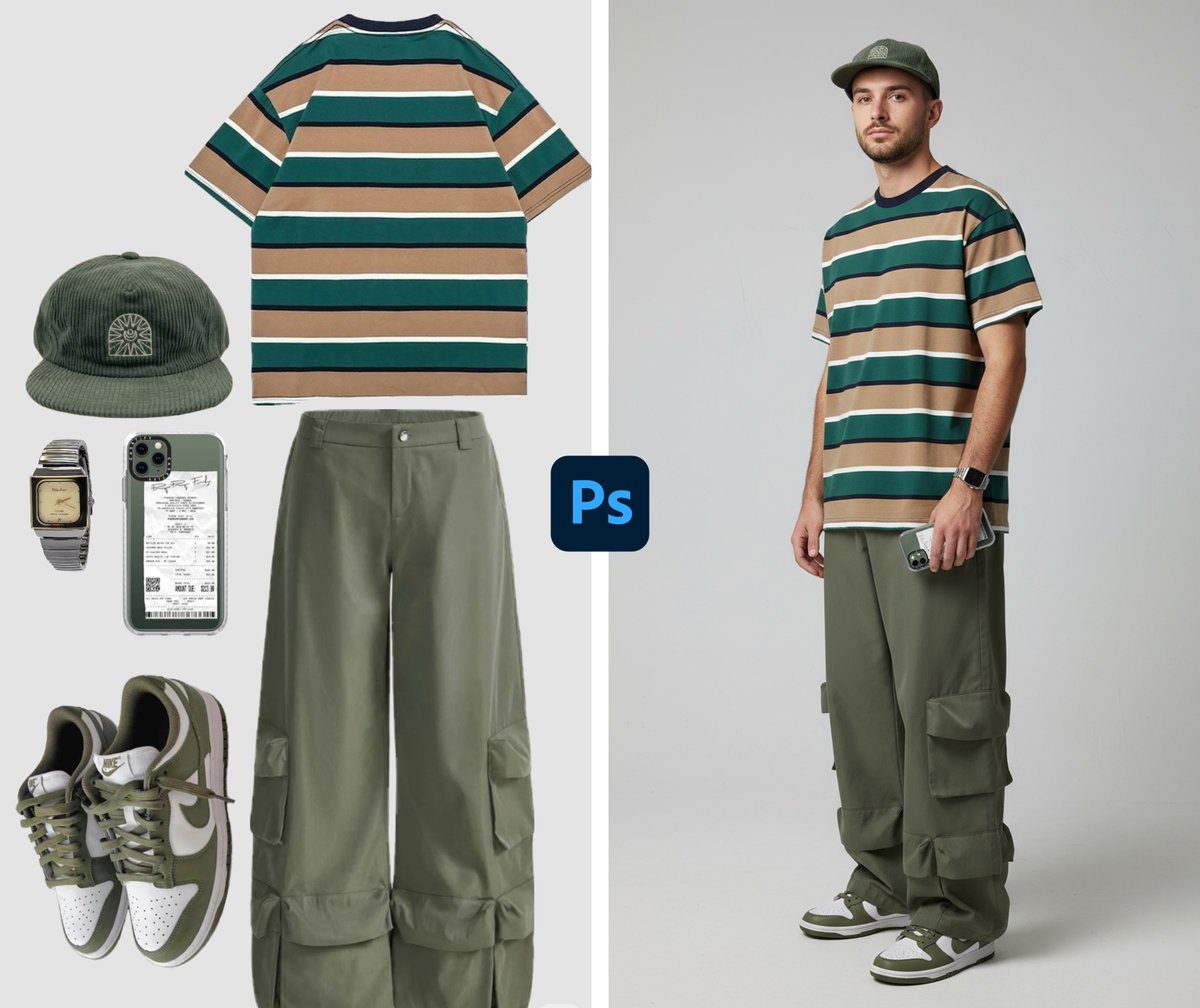
I ran several tests at 4K resolution, which is still rare for real-time generation. Most high-end tools need minutes to upscale a 1024x1024 output to 4K, and even then the result often looks soft or artifactual. The Nano Banana Pro AI image generator produces native 4K images through a combination of GPU acceleration and a specialised upscaling module that does not just resize pixels but also infers missing detail using semantic segmentation. Edges remain sharp, and textures like wood grain or fabric weave look natural rather than painted on.
Speed is another pleasant surprise. On a mid-range consumer GPU with 12GB of VRAM, a single 4K image takes about eight seconds. That is fast enough for iterative work where you want to try a few prompt variations and pick the best one. The system also supports multi-language support natively, which is helpful if your workflow involves prompts in Japanese, Arabic, or French. I tested German and Spanish prompts, and the output quality did not drop. That is because the language model backbone handles tokenisation across scripts equally well.
Trade-offs and Realistic Expectations
No tool is perfect. The physics engine makes the generator slower than a pure diffusion model for very simple scenes. If you only need a flat, abstract texture, you might be better served by a lighter model. The physics simulation also uses extra VRAM, so users with older GPUs may need to drop to 1080p or adjust the aspect ratio to 16:9 to keep generation times reasonable. I found that square aspect ratios around 1:1 work fastest because the internal tile processing divides evenly, but 16:9 and 4:3 are perfectly usable with a small performance hit.
Another consideration is prompt engineering. While the model understands natural language well, it still benefits from clear, specific descriptions. Vague prompts like "a nice landscape" produce generic results. But if you describe the lighting, the time of day, and the dominant colours, the physics engine has enough constraints to produce something striking. I have found that including a verb that implies motion, like "spilling" or "falling," triggers the physics engine most effectively.
How It Fits Into a Content Creation Workflow
For professionals in digital art, advertising, or product design, the Nano Banana Pro AI image generator can replace several steps that previously required separate tools. You can generate a hero image at 4K resolution, adjust the composition with a new prompt, and keep the lighting and physics consistent across iterations. That consistency is hard to achieve with other generators, which often change the subject's appearance between runs because of random stochastic sampling.

I have also used it for storyboarding. The ability to specify camera angle, lens distortion, and depth of field through natural language, and have the physics engine respect those parameters, saves hours of manual sketching. The computer vision components behind the scenes handle semantic segmentation, so the generator knows where the foreground ends and the background begins, and the physics engine ensures that objects in the foreground cast shadows on the background correctly.
Multilingual and Global Use
The multi-language support is not an afterthought. I tested prompts in Mandarin and Arabic, and the output quality was indistinguishable from English prompts. That matters if you are creating content for a global audience. The language model does not just translate the prompt; it understands cultural context. For example, a prompt about a traditional Japanese tea ceremony in Japanese generated images with tatami mats and the correct type of teaware, while the same prompt in English produced a more generic interpretation. That kind of subtlety is rare.
Hardware and Performance Notes
- Minimum recommended GPU: 8GB VRAM for 1080p generation at standard aspect ratios.
- For 4K resolution, 12GB VRAM or more is advisable, especially if you use the physics engine at full fidelity.
- CPU-only generation is not supported; the system relies on GPU acceleration for both the neural network and the physics simulation.
- Generation time scales roughly linearly with image area, so a 4K image takes about four times as long as a 1080p image.
- The tool can batch generate up to four images at once on a 24GB GPU, which is useful for A/B testing prompts.
Where the Field Is Heading
The inclusion of a physics engine in a text-to-image model points to a broader trend where generative tools stop being purely statistical and start incorporating real-world rules. I expect future versions of the Nano Banana Pro AI image generator and similar tools to include even more detailed physics, like fluid dynamics for liquids and soft-body dynamics for fabrics. That would make AI rendering viable for industries like fashion, where fabric drape matters, or automotive design, where reflections on curved metal surfaces need to be accurate.
The partnership with Google DeepMind's Gemini 3 Pro also suggests that we will see tighter integration between language understanding and visual generation. Right now, the model can handle complex prompts, but it still sometimes stumbles on very long, nested descriptions. As the language model improves, prompt engineering will become less of a skill and more of a natural conversation.
Final Thoughts
After spending real time with the Nano Banana Pro AI image generator, I am convinced that physics-aware generation is not a gimmick. It solves a genuine problem in AI rendering: images that look right at a glance but fall apart under scrutiny. This tool produces images that hold up when you zoom in, when you check the shadows, and when you compare the lighting across multiple outputs. For anyone doing serious content creation, digital art, or product visualisation, that level of consistency is worth the extra seconds of generation time.
It is not a magic wand. You still need to invest in prompt engineering and understand how aspect ratio and resolution affect the output. But the gap between what you imagine and what the machine produces has shrunk significantly. And that is the real promise of a tool built on a neural network, a physics engine, and a world-class language model working in concert.